
The Difference Between a Pipefitter and a Plumber as a Craft
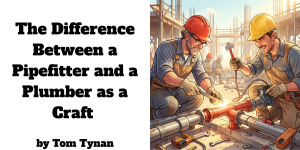
Two crafts. One vital purpose: keeping water flowing and industry running.
Although pipefitters and plumbers both work with piping systems and are often grouped together in the construction trades, they represent two distinct crafts with different scopes of work, technical demands, and areas of specialization. Understanding the difference between the two is important for anyone considering a career in the mechanical trades or hiring skilled professionals for a project.
At its core, plumbing focuses on systems that carry water and waste in residential, commercial, and institutional buildings. A plumber installs, repairs, and maintains potable water systems, drainage systems, venting systems, and fixtures such as sinks, toilets, water heaters, and faucets. Their work ensures that clean water flows into a building and wastewater flows safely out. Plumbing work is highly code-driven and requires a strong understanding of local and national plumbing regulations to protect public health and sanitation.
In contrast, pipefitting involves the installation and maintenance of high-pressure and high-temperature piping systems typically found in industrial and commercial settings. Pipefitters work on systems that carry steam, compressed air, chemicals, fuel, oil, and process piping for manufacturing plants, refineries, and power generation facilities. Their craft requires precise layout skills, advanced blueprint reading, and knowledge of welding, rigging, and system alignment.
One of the major differences between the crafts lies in the type of materials and pressures involved. Plumbing systems generally operate at lower pressures and temperatures. Pipefitting systems, however, may operate under extreme pressure and heat, requiring heavier materials, advanced welding techniques, and rigorous inspection procedures.
The work environment also differs. Plumbers typically work inside buildings, often in finished spaces or residential settings. Pipefitters more commonly work in industrial plants, construction sites, or mechanical rooms where large-scale equipment such as boilers, chillers, and pumps are installed.
Training pathways are similar in structure but distinct in content. Both crafts typically require apprenticeships combining classroom instruction and on-the-job training. However, pipefitting training emphasizes industrial systems, welding, and advanced blueprint interpretation, while plumbing training centers on sanitation systems, fixture installation, water supply, and code compliance.
In summary, while plumbers and pipefitters both work with piping systems, their crafts serve different purposes. Plumbers protect public health by installing and maintaining water and waste systems in buildings. Pipefitters build and maintain the industrial piping systems that power facilities and production processes.
Tom Tynan – Director of Training



 /WorkTexas
 /WorkTexas
 @worktexas_
 @WorkTexas
 /WorkTexas