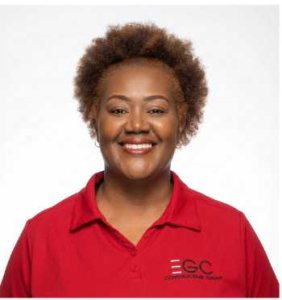
Alumni-Owned Business Spotlight: Chandra Topps, WorkTexas Alumnus
For Chandra Topps, a WorkTexas alumnus, entrepreneurship is not about pursuing rapid growth; it is about establishing a solid foundation, maintaining integrity, and committing to consistent progress. As a five-time WorkTexas training alumnus and the founder of EGC Construction Group, Topps is applying the discipline and technical knowledge gained from workforce training to create a construction company that emphasizes reliability and professionalism.
Building with Purpose
EGC Construction Group, located in Houston, specializes in HVAC systems, electrical services, foundation repair, and general construction for residential and small commercial clients. Although the company is still in its growth phase, Topps is committed to building a strong reputation from the very beginning.
Her focus is clear: to deliver quality work, comply with industry standards, and maintain transparent communication with every clie
nt. Topps believes that even a growing company can operate with a high level of professionalism and integrity, and she is determined to prove this one project at a time.
Addressing Industry Inconsistency
Topps launched her business with a specific problem in mind: the persistent inconsistency in the construction industry. From her experience, homeowners and small businesses often face challenges with contractors who do not communicate effectively, fail to follow through on commitments, or complete their work with care.
Through EGC Construction Group, Topps aims to restore trust by prioritizing reliability, transparency, and accountability. Her goal is to provide clients with a dependable option, particularly for those who value honest service and clear expectations.
A Milestone Built on Preparation
One of Topps’ proudest achievements is not a single project, but the way she thoughtfully structured her business from the very beginning. After completing nearly all the courses offered through WorkTexas, she enhanced both her technical skills and professional confidence.
She continued to invest in her development by completing the Mattress Mack School of Selling, which sharpened her communication and relationship-building skills. This training opened the door for her to participate in the prestigious Goldman Sachs Small Business program, reinforcing her belief that consistent preparation creates meaningful opportunities.

From Participant to Owner
Topps describes her journey as gradual and intentional. Instead of hurrying into entrepreneurship, she concentrated on understanding compliance requirements, business structure, and long-term planning.
“Transitioning from participant to business owner required patience, faith, and a willingness to grow through challenges,” she shared.
Each step—ranging from workforce training to advanced business programs—added layers of discipline and confidence that now influence her leadership approach.
The WorkTexas Impact
Topps credits WorkTexas with helping her cultivate the mindset needed for entrepreneurship. The program emphasized not only technical skills but also safety, accountability, and structure—qualities that are essential for running a construction company.
“Entrepreneurship requires more than just technical skills,” she noted. “It demands consistency and responsibility.”
Her experience in the program made her realize that with the right preparation and commitment, ownership is indeed achievable.
Overcoming Early Challenges
Like many new business owners, Topps faced the challenge of establishing credibility in an industry where reputation takes time to build. Managing resources wisely while pursuing growth also demanded careful discipline.
Her strategy has been simple yet powerful: focus on preparation, stay patient, and keep learning. By avoiding the temptation to rush the process, she has positioned EGC Construction Group for sustainable growth instead of seeking short-term gains.
Growing with Intention
In its early days, Topps focused on establishing the company correctly and implementing proper systems. Today, the emphasis has shifted to steady expansion, forming strategic partnerships, and ensuring long-term stability.
Meanwhile, EGC Construction Group, while still in its growth phase, has become more structured, focused, and better prepared for responsible growth.
Community Impact and Future Vision
Topps recognizes that construction work is crucial for the safety and stability of homes and businesses. By prioritizing quality workmanship and strict compliance with regulations, her company contributes to creating stronger and safer spaces within the community.
Looking ahead, she aims to give back through workforce development and mentorship, providing opportunities for individuals seeking direction in the skilled trades, just as she once did.
Her long-term vision is ambitious: she aspires to become a home builder specializing in contemporary multi-million-dollar homes that feature extensive glass and stucco finishes. For now, however, she remains focused on mastering each stage of her growth.
Defining Success
At this stage in her journey, Topps defines success in a way that differs from many entrepreneurs. For her, success means:
– Completing projects effectively
– Building trust with clients
– Operating with integrity
– Continuously learning and improving
Instead of concentrating on the size of her company, she prioritizes consistency and sustainability—principles that guide every decision she makes.
Closing Reflection
“I am still building, both personally and professionally,” Topps shared. “Every course I completed, every lesson I learned, and every challenge I faced have shaped this journey.”
With patience, discipline, and a commitment to doing things the right way, Chandra Topps is not just constructing buildings; she is building a sustainable business.
Learn More
EGC Construction Group, located in Houston, Texas, invites conversations, partnerships, and community connections. Visit EGCConstructionGroup.com to learn more.





 /WorkTexas
 /WorkTexas
 @worktexas_
 @WorkTexas
 /WorkTexas